
Inspiration
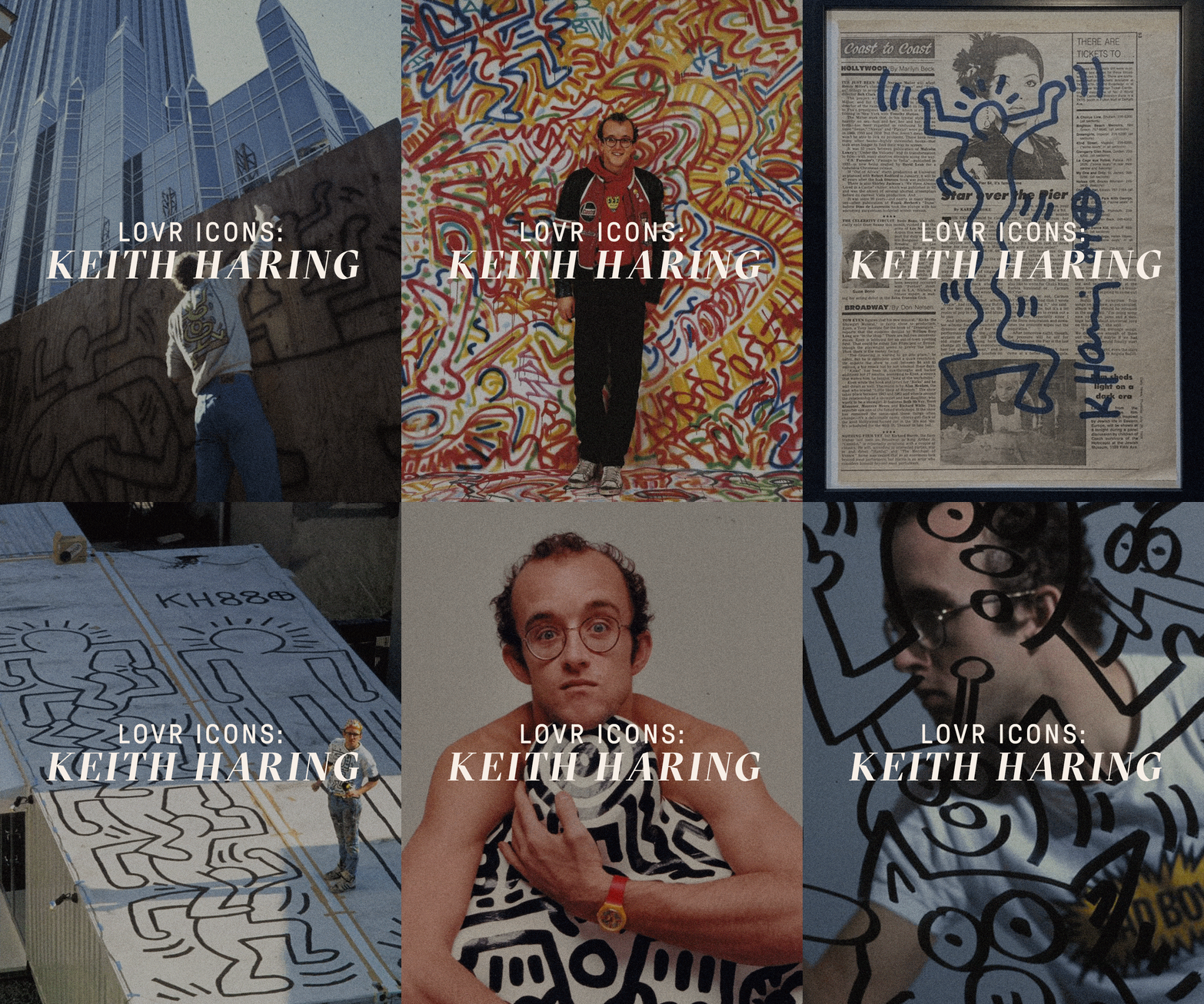
LOVR Atelier: Keith Haring
"I am not a beginning. I am not an end. I am a link in a chain." - Keith Haring
Welcome to LOVR Atelier. In this bi-monthly series, we worship the artists who revolutionised the world around them – those who left a permanent impression upon the zeitgeist.
This instalment celebrates the fearless, unmistakable legacy of Keith Haring, an artist who believed that art was for everyone, and proved it with every line he drew.
The Power of the Line
With thick, fluid outlines, kinetic energy, and a cast of recurring figures (radiant babies, barking dogs, flying saucers), Haring created a visual lexicon as recognisable as hieroglyphics or the written word.
Influenced by graffiti culture, Pop Art, and underground comics, Haring introduced his work into subways, onto sidewalks, and – eventually – into galleries. No matter the surface, the message was the same: art is a language of movement, art is a language of connection.
Haring’s style was deceptively simple, categorised by bright colours and cartoon-like imagery. However, behind this simplistic facade was a fierce intentionality. Haring’s figures weren’t just dancing; they were communicating. They were celebrating life while grappling with its limits.
Activism and Advocacy
Haring believed art was not a retreat from the world, but a way into it. As a gay man living through the AIDS crisis, he knew silence equalled death, so he refused to stay silent. His work became a megaphone for social change, advocating for LGBTQ+ rights, anti-apartheid efforts, anti-drug education, and safe sex awareness.
His public murals and posters were acts of defiance. He created art for hospitals, community centres, orphanages, and subways. He opened the Pop Shop in 1986 to make his art accessible to everyone. To Haring, accessible art was the sole mission.
In 1989, a year after being diagnosed with AIDS, Haring established the Keith Haring Foundation, which – to this day – continues to support children’s programs, arts education, and organisations working to end HIV/AIDS. His activism was personal, unwavering, and deeply profound.
An Everlasting Light
Keith Haring died in 1990 at the age of 31. In just over a decade, he had created thousands of works (murals, prints, sculptures, and paintings), all infused with an unmistakable essence – a rallying cry that implores you to seize your one, precious life.
Like many of his generation, Haring succumbed to the HIV/AIDS epidemic, a crisis that the world didn’t confront soon enough. His legacy lives on upon walls, in books, on T-shirts and tattoos; it vibrates in classrooms, hospitals, and political protests. His legacy belongs to everyone, exactly as he intended.
Haring will always be remembered as a visionary who gave shape to joy and pain, an activist who insisted that love and justice weren’t separate things, and an advocate who taught us that art could speak even when words failed.
LOVR Atelier: Joan Didion


LOVR AGENCY © FOREVER


